


Yes — Creatine, Protein, and a Multivitamin Can Generally Be Taken Together.
But they do not become more powerful simply because they share the same shaker bottle, breakfast, or morning routine. Protein, creatine, and multivitamins solve different nutritional problems. The smart stack is not about magical synergy — it is about giving each tool a defined job.
Can You Take Creatine, Protein, and a Multivitamin at the Same Time?
For most healthy adults, yes.
There is no established requirement to separate a normal serving of creatine monohydrate from a protein shake or a standard multivitamin.
What matters more is appropriate dosing, total daily protein, consistent creatine use, overall diet, avoiding nutrient duplication, and whether each supplement actually fits the person.
Key Takeaways
They act through different nutritional and physiological pathways.
Daily creatine intake and maintaining muscle creatine stores matter more than chasing a precise pre- or post-workout window.
Training stimulates muscle protein synthesis for far longer than a 30-minute “anabolic window.”
Its job is broad micronutrient coverage when the diet or life stage creates a reason for it.
Vitamin D, zinc, magnesium, B vitamins, caffeine, botanicals, and other ingredients can quietly accumulate across products.
Complete protein, creatine, and micronutrient coverage should not be treated as interchangeable.
The Three-Job Framework
Forget the “Synergy Protocol.”
Think in jobs.
Supplies essential amino acids and the building material needed for muscle protein synthesis and tissue repair.
Increases muscle creatine and phosphocreatine availability, supporting repeated high-intensity work and training adaptations.
Provides broad micronutrient coverage when diet, life stage, calorie intake, or other factors create nutritional gaps.
Different Job. Same Routine. No Magic Synergy Required.
These products can coexist in the same routine because they solve different problems — not because swallowing them simultaneously creates a special anabolic reaction.

What Does Creatine Actually Do?
Creatine helps increase muscle creatine and phosphocreatine stores.
That supports rapid regeneration of ATP during repeated bouts of high-intensity muscular work.
In practical terms, creatine can help support:
- strength
- power
- repeated high-intensity exercise
- training volume
- lean-mass gains when combined with resistance training
How Much Creatine?
A common maintenance strategy is:
3–5 g creatine monohydrate daily.
A loading phase can saturate muscle creatine stores faster, but loading is not required.
Consistent daily use will also increase muscle creatine stores over time.
Vital Forge
Vital Forge provides 5 g of creatine monohydrate per serving.
It solves the creatine problem. It does not provide complete protein or replace a nutritionally adequate diet.
Explore Vital Forge →Does Creatine Have to Be Taken Before or After Training?
No precise timing window has been established as necessary.
The main goal is to maintain elevated muscle creatine stores.
That means the best time is often:
the time you will consistently remember to take it.
Mixing creatine into a post-workout protein shake is perfectly reasonable.
So is taking it with breakfast.
Or lunch.
Protein Supplies What Creatine Cannot.
Creatine does not contain the essential amino acids required to build new muscle protein.
Complete protein does.
Protein provides:
- essential amino acids
- leucine
- nitrogen
- substrate for tissue repair and remodeling
Think Daily Protein First.
For exercising adults, research commonly supports protein feedings in the neighborhood of 20–40 g of high-quality protein, depending on body size, age, meal composition, and training.
Total daily protein and adequate essential amino acids matter more than obsessing over one perfect shake.
Do You Have to Drink Protein Immediately After Training?
No 30-minute emergency window exists.
Resistance exercise increases muscle sensitivity to protein for many hours afterward.
Protein around the workout can absolutely be useful.
But whether it needs to be immediately after training depends heavily on:
- when you last ate protein
- total daily intake
- meal distribution
- training schedule
- age
- personal tolerance
Hit the Daily Target. Distribute It Sensibly. Stop Racing the Clock.
Protein timing can be useful. Total daily protein remains the larger priority.
Which ProofMode Protein Fits?
Complete whey isolate when efficient protein and essential amino acids are the goal.
A simpler complete whey option when increasing total daily protein is the main goal.
Explore Vital Pure →Plant-based protein when dairy-free nutrition better fits the person.
Explore Vital Root →Are Creatine and Protein “Synergistic”?
They complement each other.
That is slightly different from claiming magical synergy.
Creatine may allow:
- more high-quality training
- better repeated high-intensity performance
- greater training adaptations over time
Protein provides the amino acids needed to support remodeling and muscle protein synthesis.
When both are combined with progressive resistance training:
they support different parts of the same adaptation process.
Where Does the Multivitamin Fit?
Somewhere completely different.
A multivitamin does not:
- activate creatine
- make whey absorb better
- turn amino acids into muscle faster
- guarantee better recovery
A multivitamin can help fill selected nutritional gaps when dietary intake is inconsistent or inadequate.
NIH notes that multivitamin/mineral products can increase micronutrient intake, particularly when diet alone falls short.
But they do not replace a varied diet and do not reliably prevent chronic disease in generally healthy adults.
A Multivitamin Covers Gaps. It Does Not Complete Your Workout.
Its usefulness depends on the diet and the person — not on whether it is swallowed beside creatine.
Where Does Core 3 Fit?
Core 3 is the nutritional-foundation side of the stack.
Core 3 Foundation
Core 3 organizes a multivitamin, omega-3, and probiotic/prebiotic support into one AM routine.
It does not replace protein or creatine, and those products do not replace the nutritional categories Core 3 is designed to cover.
Explore Core 3 →Complete Core 5
Complete Core 5 combines Core 3 with a separate PM Magnesium + Zinc Add-On.
That makes it broader — not automatically better. Check the rest of the stack to avoid unnecessary magnesium, zinc, vitamin D, and other nutrient duplication.
Explore Complete Core 5 →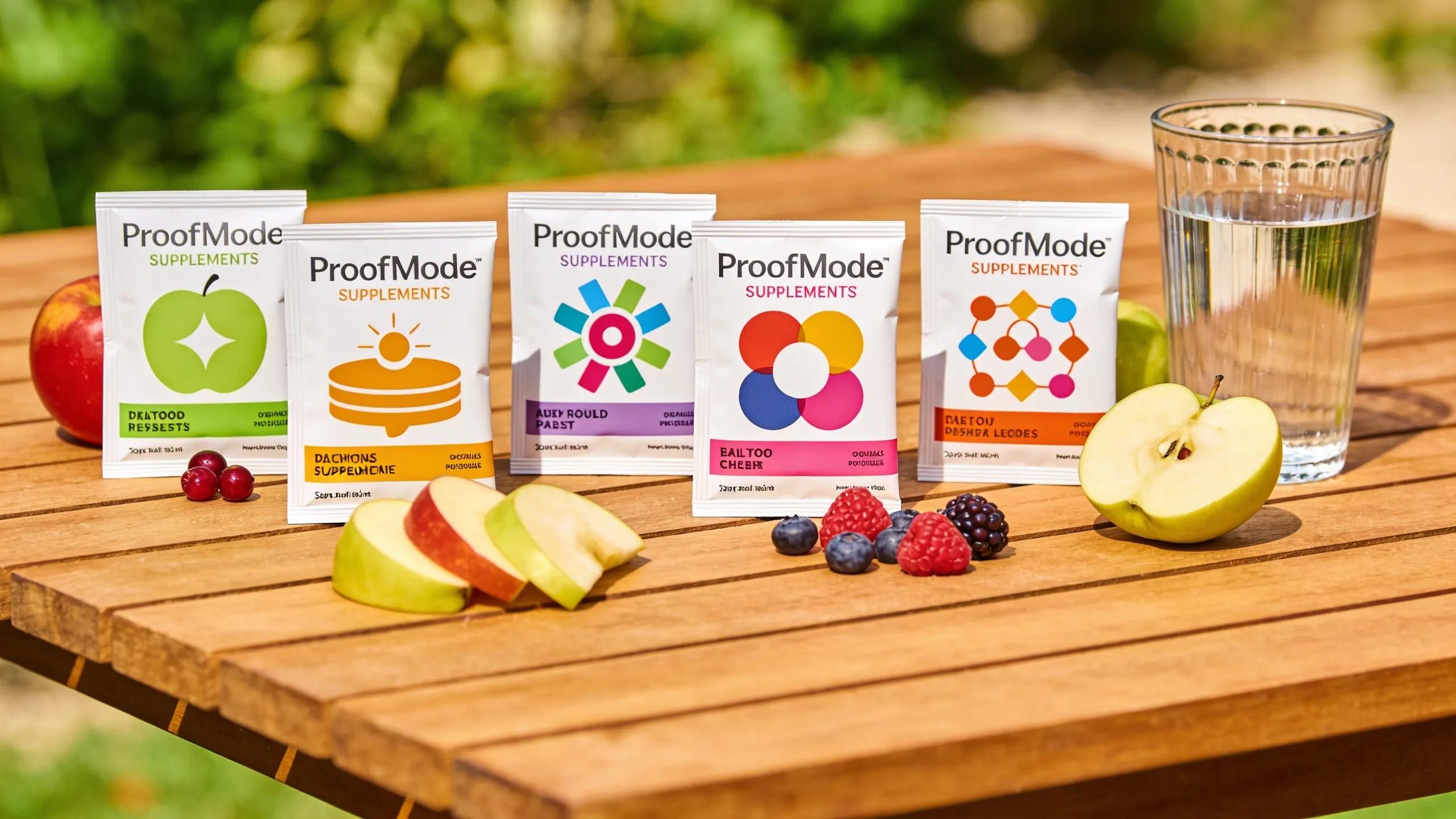
What Does Each Part of the Stack Actually Do?
| Tool | Primary Job | Does NOT Replace |
|---|---|---|
| Complete Protein | Essential amino acids + protein intake | Training or total diet |
| Creatine | Phosphocreatine availability + training performance | Complete protein |
| Multivitamin / Foundation | Broad micronutrient coverage | A high-quality diet |
What Is the Best Timing for the Stack?
There is no mandatory schedule.
But a practical routine could look like:
Multivitamin or Core 3 with food according to label directions.
Complete protein based on when your surrounding meals occur.
Creatine monohydrate — including mixed directly into a protein shake if convenient.
Separate PM Magnesium + Zinc component according to the product directions.
Can You Put Creatine Directly Into a Protein Shake?
Yes.
Creatine monohydrate can be mixed into:
- protein shakes
- water
- smoothies
- other beverages
Drink it normally rather than preparing it and leaving it sitting for prolonged periods unnecessarily.
Is the Combination Safe?
For most healthy adults using reasonable doses, combining ordinary protein, creatine monohydrate, and a standard multivitamin does not create a known harmful interaction simply because they are taken together.
But safety depends on the individual.
Review the Stack More Carefully If You Have:
- known kidney disease
- significant liver disease
- pregnancy or breastfeeding
- complex medication therapy
- a medically prescribed protein restriction
- significant GI disease
- multiple supplements containing overlapping vitamins or minerals
Does Creatine Damage the Kidneys?
Current evidence in healthy adults does not support the common claim that recommended-dose creatine monohydrate causes kidney damage.
But there is an important laboratory nuance.
Creatine supplementation can increase:
serum creatinine.
Creatinine is also used to estimate kidney filtration.
So creatine supplementation can sometimes make creatinine-based kidney estimates look different even when actual kidney injury has not occurred.
Creatinine Is Not the Same Thing as Kidney Injury.
Recent systematic reviews found small increases in serum creatinine with creatine supplementation without corresponding evidence of impaired kidney filtration using more direct kidney-function measures.
Getting Kidney Labs?
Tell the clinician interpreting the results that you take creatine.
Context matters.
The Bigger Stacking Risk: Ingredient Duplication
This is where supplement stacks get messy.
Imagine someone takes:
- a multivitamin
- an immune product
- a sleep product
- a hydration powder
- a pre-workout
Suddenly the same nutrients appear over and over:
- vitamin D
- zinc
- magnesium
- vitamin B6
- niacin
- caffeine
Count Ingredients Across the Whole Day — Not One Label at a Time.
A safe-looking dose on one product can become excessive when the same ingredient appears in three other products.
What If You Want a Broader Performance Stack?
Performance Pack
The ProofMode Performance Pack combines several performance-oriented categories including creatine, carnitine, nicotinamide riboside, BCAAs, cordyceps, and rhodiola.
It is broader than simply adding creatine to a protein shake, so ingredient overlap and the reason for each component deserve more attention.
Explore Performance Pack →What This Does NOT Mean
It does not mean everyone needs creatine.
Creatine is useful, but it should still have a defined goal.
It does not mean everyone needs protein powder.
Protein powder is a convenient food-like tool for meeting protein needs when diet alone is inconvenient or insufficient.
It does not mean everyone needs a multivitamin.
Multivitamins can help fill dietary gaps but are not universally required.
It does not mean taking all three simultaneously creates superior absorption.
No special “synergy protocol” is required.
It does not mean more supplements produce more muscle.
Resistance training, calories, complete protein, recovery, and consistency remain the foundation.
The ProofMode Stack Decision Tree
Fix complete protein first.
Creatine monohydrate may be a useful additional tool.
A foundational multivitamin system may fit.
Audit duplicate ingredients before adding anything else.
Stop adding products just because another stack sounds more advanced.
A Simple Example Routine
| Time | Example | Reason |
|---|---|---|
| Breakfast | Core 3 | Routine + broad foundational nutrition |
| Around Training | Vital Iso / Pure / Root | Complete protein when convenient |
| Same Shake or Any Time | Vital Forge | Daily creatine consistency |
| Evening if using Core 5 | PM Magnesium + Zinc | Separate PM mineral component |
Eat the Protein. Train the Muscle. Use Creatine if It Has a Job. Fill Nutritional Gaps Intentionally.
That is the stack. No exotic timing protocol required.
Related ProofMode Guides
Build the nutritional base before adding increasingly specialized products.
Read Foundations First →Why protein and resistance training matter for maintaining muscle across the lifespan.
Read the Protein Guide →Kidneys, hair loss, water weight, and the claims that deserve a closer look.
Read the Creatine Guide →Choose the nutritional foundation before adding more complexity.
Compare the Foundations →Frequently Asked Questions
Can I take creatine, protein powder, and a multivitamin together?
For most healthy adults, yes. There is no established requirement to separate ordinary doses of creatine monohydrate, complete protein, and a standard multivitamin simply because they are different supplements.
Can I put creatine in my protein shake?
Yes. Mixing creatine monohydrate into a protein shake is a practical way to improve consistency.
Should creatine be taken before or after a workout?
Consistency matters more than a precise timing window. Creatine works by increasing and maintaining muscle creatine stores over time.
How much creatine should I take daily?
A common maintenance dose is 3–5 g of creatine monohydrate per day. Individual circumstances can differ.
Do I need to drink protein immediately after training?
No. Protein around training can be useful, but resistance exercise increases the muscle's anabolic response for many hours. Total daily protein and sensible distribution are generally more important than racing to drink a shake within 30 minutes.
Does a multivitamin help build muscle?
Not directly. Vitamins and minerals support normal physiology, but muscle gain still depends primarily on resistance training, adequate calories, sufficient complete protein, recovery, and individual biology.
Does a multivitamin make creatine work better?
There is no established requirement to pair creatine with a multivitamin to improve creatine effectiveness.
Does creatine damage the kidneys?
Recommended-dose creatine monohydrate has not been shown to impair kidney function in healthy adults in current systematic reviews. Creatine can modestly raise serum creatinine, which may affect creatinine-based kidney estimates without necessarily indicating kidney injury.
Should I stop creatine before getting bloodwork?
Do not change a supplement regimen solely to manipulate laboratory results unless your clinician asks you to. Tell the clinician interpreting kidney-function tests that you use creatine so serum creatinine can be interpreted in context.
Is Vital Forge already included in Core 3?
No. Core 3 is the AM nutritional foundation. Vital Forge is a separate creatine monohydrate product with a different purpose.
Do I need Core 5 if I already use creatine and protein?
Creatine and protein do not replace the nutritional categories contained in Complete Core 5. Whether Core 5 fits depends on your diet, current supplements, goals, and whether the additional PM magnesium and zinc are appropriate.
Key Evidence + Reference Points
2026 Systematic Review + Meta-Analysis — Creatine and Kidney Function.
Creatine supplementation was associated with a modest rise in serum creatinine but no significant change in serum urea or eGFR compared with controls, supporting the distinction between creatinine metabolism and actual renal injury.
PubMed →
2026 Systematic Review — Creatine and Kidney Health.
Creatinine-based estimated filtration can change during creatine use while more direct filtration assessment does not show the same pattern, supporting cautious interpretation of serum creatinine in creatine users.
PubMed →
2026 Structured Review — Creatine Safety.
Across hundreds of randomized trials, reported adverse effects were infrequent and no consistent dose- or duration-dependent pattern of clinically meaningful risk was identified.
PubMed →
ISSN Position Stand — Protein + Exercise.
Total daily protein and adequate essential amino acids are central to muscle protein synthesis. Typical high-quality protein servings are approximately 20–40 g, with distribution across the day useful for exercising adults.
PubMed →
Network Meta-Analysis — Protein Timing.
Protein around exercise can support muscle and strength adaptations, but current evidence does not establish a narrow universal post-workout window that overrides total protein intake and training context.
PubMed →
NIH Office of Dietary Supplements — Multivitamin/Mineral Supplements.
Multivitamins can increase micronutrient intake and may help fill dietary gaps, but they do not replace a varied diet and have not reliably been shown to prevent chronic disease in generally healthy adults.
NIH Fact Sheet →
Give Every Supplement a Job.
Protein supplies the building material. Creatine supports the work. A multivitamin can help cover nutritional gaps. They can live in the same routine without pretending they become something magical when swallowed together.
The Takeaway
Yes, creatine, protein, and a multivitamin can generally be taken together.
Creatine does not need a precise workout window.
Protein does not have to be consumed within 30 minutes of the final rep.
A multivitamin does not make creatine or protein more anabolic.
Creatine supports repeated high-intensity work.
Complete protein supplies essential amino acids.
A foundational multivitamin system can help cover selected nutritional gaps.
The main stack-management issue is often ingredient overlap — not whether the products were swallowed at the same time.
Count total daily ingredients, train progressively, eat enough complete protein, and use creatine consistently if it fits the goal.
Different job. Same routine. No magic synergy required.
This article is for educational purposes only and is not medical advice. Supplement needs vary with diet, age, training, pregnancy status, medications, kidney and liver function, medical conditions, allergies, and individual goals. People with known kidney disease, medically prescribed protein restrictions, complex medication regimens, or other significant health conditions should review creatine, protein, and supplement use with an appropriate healthcare professional. Always account for overlapping vitamins, minerals, stimulants, and other active ingredients across the complete daily regimen.


