


Methylene Blue Is a Real Drug With Interesting Mitochondrial Biology — Not a Shortcut to “More Energy.”
Methylene blue has legitimate medical history, unusual redox chemistry, and an expanding research literature involving mitochondria and the nervous system. But mechanistic interest should not be confused with proof that oral methylene blue improves energy, cognition, mood, or longevity in otherwise healthy adults.
Methylene blue may be one of the strangest compounds to move from nineteenth-century dye chemistry into modern biohacking.
It has been used as:
- a dye
- a laboratory stain
- a pharmaceutical agent
- a methemoglobinemia treatment
- a research tool in mitochondrial and neurobiology studies
That history makes it scientifically interesting.
It does not make every modern wellness claim true.
What Is Methylene Blue Actually Approved For?
In the United States, methylene blue injection is an FDA-approved prescription drug for acquired methemoglobinemia.
Methemoglobinemia is a condition in which hemoglobin iron is oxidized into a form that cannot carry oxygen normally.
Methylene blue acts as a reducing agent in that medical context.
A Hospital Dose Is Not a Wellness Dose.
Prescription dosing used to treat methemoglobinemia should not be converted into an oral “biohacking” protocol. Different indication, route, concentration, exposure, and medical context mean those numbers are not interchangeable.
Why Has Methylene Blue Become Popular in Wellness Circles?
Most of the current enthusiasm centers on three ideas:
- mitochondrial redox cycling
- cellular energy metabolism
- neurobiological research involving memory and cognition
All three have legitimate scientific roots.
The question is how far those findings can be translated into claims about healthy people using oral drops.
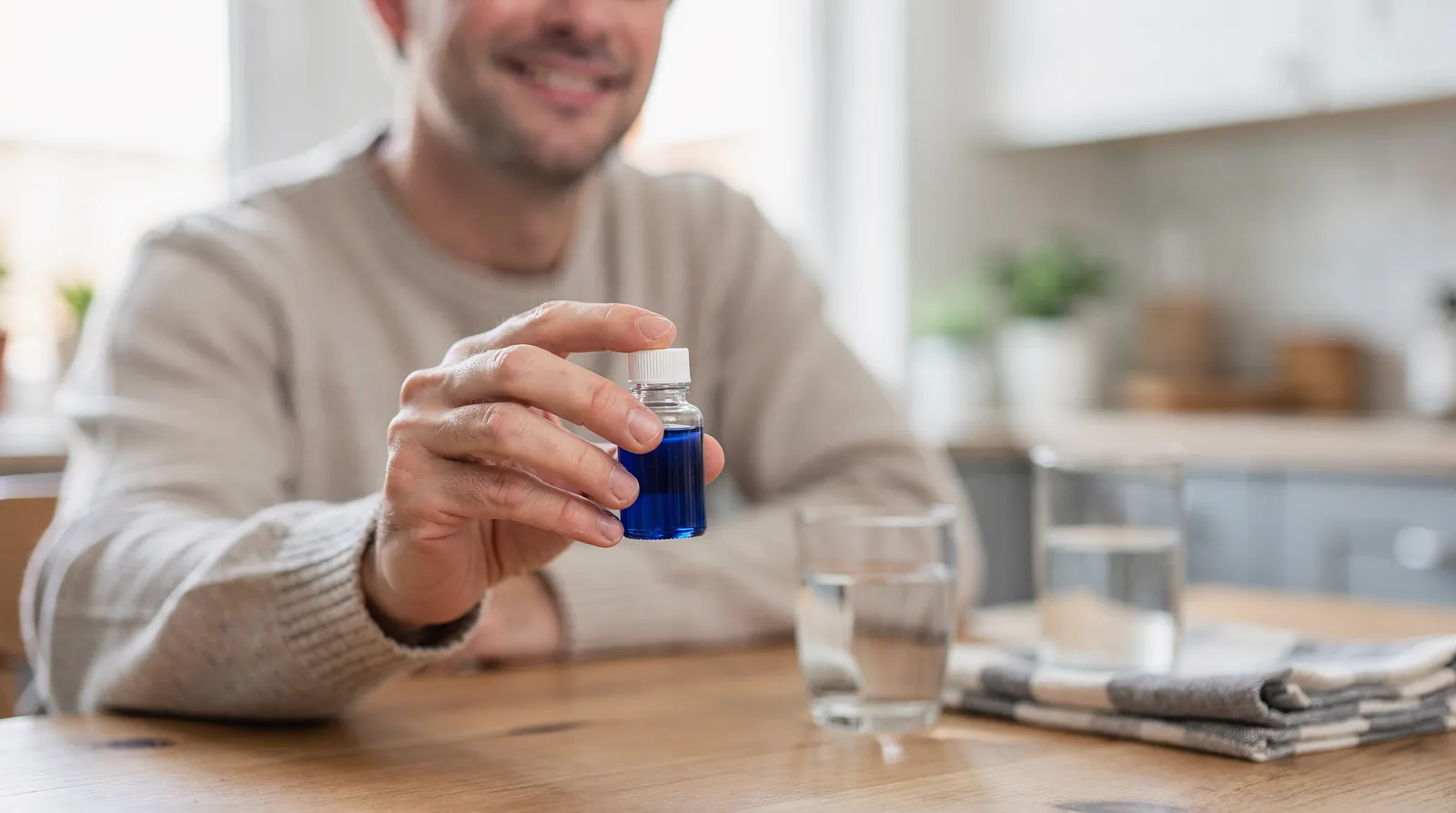
What Does Methylene Blue Do in Mitochondria?
Methylene blue is an auto-oxidizable redox compound.
It can cycle between oxidized methylene blue and reduced leucomethylene blue.
Experimental research suggests this redox cycling can allow methylene blue to participate in alternative mitochondrial electron transfer.
Methylene Blue Can Act as an Alternative Electron Carrier.
Experimental work describes methylene blue accepting reducing equivalents in mitochondrial redox systems and transferring electrons toward downstream carriers such as cytochrome c, with effects on cytochrome oxidase activity, oxygen consumption, and cellular respiration.
“Complex I Straight to Complex IV” Is Too Neat.
Mitochondrial electron transport is more complicated than a one-line bypass diagram. Different experimental models describe interactions with NADH-linked electron transfer, coenzyme Q, cytochrome c, and cytochrome oxidase. The broad concept of alternative electron cycling is stronger than any oversimplified single-pathway graphic.
Does Methylene Blue Reduce Oxidative Stress?
Under some experimental conditions, low concentrations of methylene blue have been associated with reduced electron leakage and changes in reactive oxygen species production.
But methylene blue is a redox-active compound.
Its effects depend on:
- dose
- cell type
- metabolic state
- light exposure
- experimental conditions
Methylene Blue Has a Dose-Dependent Story — Not a “More Is Better” Story.
Published research describes hormetic behavior, meaning lower and higher exposures can produce very different — even opposite — biological effects.
What Human Benefits Are Actually Established?
This is where the article needs to separate three evidence levels.
Prescription treatment of acquired methemoglobinemia.
Small studies have explored methylene blue in memory, brain metabolism, and neurological contexts.
Large, definitive clinical trials have not established methylene blue as a routine cognitive enhancer, energy supplement, anti-aging therapy, or longevity intervention for healthy adults.
What About Reports of Focus, Energy, or Mood?
People online report experiences ranging from increased focus and energy to no noticeable benefit at all.
Those anecdotes can generate hypotheses.
They cannot establish efficacy.
Better Language: “Mechanistically Interesting” — Not “Clinically Proven for Energy.”
Methylene blue has a legitimate mitochondrial mechanism worth understanding. That is different from saying an oral consumer product has been proven to improve energy, cognition, or longevity.
So What Is the “Correct” Methylene Blue Dosage?
There is no universally established wellness dose.
That is the compliance-critical answer.
Research studies and medical uses employ different:
- doses
- routes
- formulations
- populations
- clinical endpoints
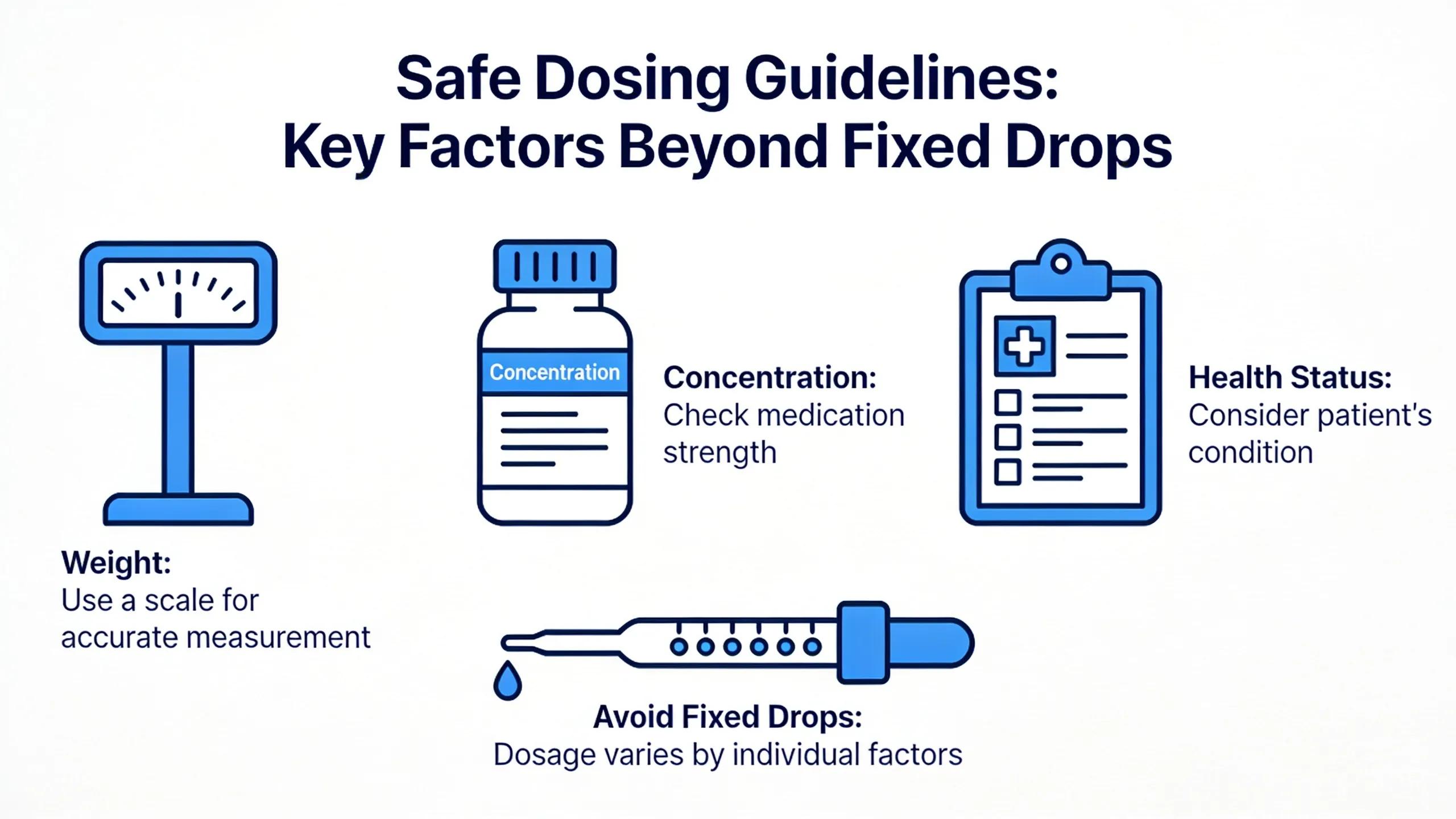
“Drops” Is Not a Dose.
A drop count is meaningless without knowing the solution concentration and drop volume. Two bottles can deliver very different amounts of methylene blue from the same number of drops.
This article intentionally does not convert research dosing into a DIY oral protocol.
That is especially important because methylene blue has:
- dose-dependent pharmacology
- clinically meaningful drug interactions
- specific safety concerns such as G6PD deficiency
- substantial variation in consumer-product concentration
What Does USP-Grade Methylene Blue Mean?
USP refers to the United States Pharmacopeia.
USP publishes a compendial monograph for methylene blue that includes identity, assay, and impurity-related specifications.
The current USP monograph defines methylene blue content within a specified assay range on a dried basis.
USP Is a Specification — Not a Universal Safety Guarantee.
A raw material legitimately conforming to the USP monograph gives meaningful information about chemical quality. It does not automatically make a finished oral product FDA approved, appropriate for every person, or free of pharmacological risk.
For the full grade and sourcing discussion, read USP Grade Methylene Blue vs Industrial: What Actually Matters .
What Should Buyers Verify Before Purchasing?
A responsible evaluation should go beyond “USP grade” printed on the front of a bottle.
How much methylene blue is present per mL or labeled serving?
Is the USP claim supported by documentation?
Does the available documentation actually correspond to the relevant lot?
What was tested rather than merely claimed?
Does the seller clearly discuss medication interactions and contraindication-type concerns?
Do Not Treat “Third-Party Tested” as a Complete Sentence.
The meaningful questions are: Which laboratory? Which lot? Which tests? Which methods? What were the actual results? A testing badge is much less useful than traceable data.
Where Do ProofMode Methylene Blue Drops Fit?
As a targeted product — not a foundational nutrient.
The product decision should come after:
- understanding what methylene blue actually does
- reviewing product concentration
- reviewing purity and documentation
- reviewing medications
- reviewing medical risk factors
ProofMode Methylene Blue Drops
If methylene blue fits your individual context, evaluate the finished product by concentration, sourcing, available quality documentation, and safety information — not by dramatic cognitive or mitochondrial promises.
Explore Methylene Blue Drops →The Biggest Medication Interaction: Serotonergic Drugs
Methylene blue can inhibit monoamine oxidase A — MAO-A.
That creates a clinically important interaction with serotonergic medications.
Methylene Blue Can Cause Serious or Fatal Serotonin Syndrome With Serotonergic Drugs and Opioids.
Current U.S. prescription labeling warns against concomitant use with SSRIs, SNRIs, MAOIs, and opioids because of serotonin-syndrome risk.
If you take an antidepressant, serotonergic medication, opioid, or other medication that affects serotonin, read Methylene Blue + SSRIs: Serotonin Syndrome Risk before treating methylene blue like an ordinary supplement.
What About G6PD Deficiency?
G6PD deficiency is another important safety consideration.
Methylene blue can contribute to hemolysis in susceptible individuals.
That is another reason product quality is only one piece of the decision.
A High-Quality Product Can Still Be the Wrong Product for You.
Identity and purity matter. So do medications, G6PD status, medical history, pregnancy status, dose, route, and whether there is a good reason to use the compound at all.
What Claims Should Make You Skeptical?
Be cautious when methylene blue is promoted as though it has been clinically proven to:
- boost energy in everyone
- reverse mitochondrial dysfunction
- prevent dementia
- treat depression
- slow aging
- extend lifespan
- improve cognition in every healthy user
Those claims travel much farther than the established human evidence.
The Mechanism Can Be Real While the Marketing Claim Is Still Ahead of the Data.
Methylene blue can participate in mitochondrial redox cycling. That does not prove that a consumer bottle produces a meaningful clinical improvement in energy, memory, or longevity.
Where Does Methylene Blue Fit in a Foundation-First Strategy?
Not at the foundation.
Methylene blue is a targeted, pharmacologically active compound.
It should not replace:
- adequate nutrition
- sleep
- movement
- hydration
- protein intake
- metabolic health
- appropriate medical care
Core 3 Foundation
Multivitamin + Omega-3 + Probiotic/Prebiotic in one simplified daily sachet.
Explore Core 3 →Complete Core 5 Foundation
Core 3 Foundation plus the separate PM Mineral Add-On with Magnesium + Zinc.
Explore Complete Core 5 →Foundation First. Precision When There Is a Reason.
Questions to Ask Before Using Methylene Blue
Frequently Asked Questions
What is methylene blue?
Methylene blue is a synthetic redox-active compound with a long history in chemistry and medicine. In the United States, prescription methylene blue injection is approved for acquired methemoglobinemia.
Does methylene blue support mitochondria?
Experimental research shows that methylene blue can participate in mitochondrial redox cycling and alternative electron transfer. That is a legitimate mechanistic finding, but it does not by itself prove a clinically meaningful energy or cognitive benefit in healthy consumers.
Does methylene blue increase ATP?
Methylene blue can influence mitochondrial respiration and electron transfer under experimental conditions, but its effects are dose- and context-dependent. It should not be marketed as a simple universal “ATP booster.”
What is the standard wellness dose of methylene blue?
There is no universally established FDA-approved oral wellness dose. Research and medical dosing should not be converted directly into self-treatment instructions.
Why doesn't this article give a drop-count protocol?
Drop count alone does not define dose because solution concentrations and drop volumes vary. Methylene blue also has dose-dependent pharmacology and clinically important interaction risks, making a generic DIY protocol inappropriate.
What does USP-grade methylene blue mean?
It means the material is represented as meeting the United States Pharmacopeia methylene blue monograph. That gives useful chemical-quality information but does not make every finished oral product FDA approved or appropriate for every person.
Can methylene blue be used with SSRIs?
Methylene blue can inhibit MAO-A and carries a serious serotonin-syndrome interaction risk with serotonergic medications. Anyone taking an SSRI, SNRI, MAOI, opioid, dextromethorphan, or another serotonergic medication should review methylene blue with the clinician or pharmacist managing those medications before use.
Does purity eliminate the serotonin-syndrome risk?
No. Purity addresses product-quality questions. Serotonin-syndrome risk comes from methylene blue's pharmacology and remains relevant even when the material is highly purified.
Does ProofMode claim methylene blue improves memory, energy, or longevity?
This article does not treat those outcomes as established benefits. Methylene blue has mechanistic and early human research relevant to mitochondrial and neurological biology, but large definitive trials have not established it as a routine cognitive, energy, anti-aging, or longevity therapy for healthy adults.
Methylene Blue Is Interesting Enough That It Does Not Need Exaggeration.
The mitochondrial chemistry is real. The medical history is real. The interaction risks are real. What still needs stronger proof are many of the everyday wellness claims built around those mechanisms.
The Takeaway
Methylene blue is a pharmacologically active compound with legitimate mitochondrial and neurological research.
It is not an ordinary foundational supplement.
There is no universal established oral wellness dose.
USP-related quality matters, but it does not eliminate medication interactions or prove wellness efficacy.
Serotonergic drug interactions and G6PD deficiency deserve serious attention.
Know the mechanism. Know the concentration. Know the evidence. Know the medications. Then decide whether the compound belongs in the conversation.
This article is for educational purposes only and is not medical advice. Methylene blue is a pharmacologically active compound with clinically meaningful drug-interaction and safety considerations. U.S. prescription labeling warns of serious or fatal serotonin syndrome when methylene blue is used with serotonergic drugs and opioids. G6PD deficiency is another important safety consideration. This article does not provide an oral dosing protocol and should not be used to convert prescription or research dosing into self-treatment. Do not start methylene blue, stop or alter prescribed medications, or attempt a medication washout without guidance from an appropriate healthcare professional.


