


A Pharm.D. on the Label Should Make You Ask More Questions — Not Fewer.
Pharmacist involvement can add meaningful value to supplement education and product review. But a professional credential does not automatically turn a weak formula into a strong one. The ingredient, dose, evidence, interactions, manufacturing, and actual finished product still have to stand on their own.
Are Pharmacist-Led Supplements Better?
They can be better evaluated.
Pharmacists are trained to think about dose, drug interactions, adverse effects, duplication, contraindications, evidence quality, and appropriate use.
But pharmacist involvement does not replace the need for a sound formula, appropriate manufacturing, truthful claims, meaningful doses, and relevant human evidence.
Key Takeaways
A Pharm.D. credential does not independently establish that a product works.
Dose, interactions, adverse effects, duplication, timing, and contraindications are natural parts of pharmacist thinking.
Look for specific evidence such as manufacturing controls, testing documentation, ingredient identity, and disclosed doses instead of premium-sounding language.
Dietary supplement facilities may be required to register with FDA, but FDA generally does not approve supplements for safety or effectiveness before sale.
Sachets can simplify routines, but the ingredients still need to make sense independently.
Education should improve the decision — not force every decision toward another product.
What Does Pharmacist Training Actually Add?
Pharmacists are medication experts.
Their professional training centers heavily on:
- dose
- drug selection
- drug interactions
- side effects
- contraindications
- administration
- monitoring
- patient counseling
Those habits transfer well to supplements.
The pharmacist's instinct should be:
What is it? How much? Why? With what? For whom? For how long?
The Pharmacist Should Make the Questions Harder — Not the Marketing Louder.
A pharmacist-led supplement company should be more willing to discuss limitations, interactions, duplicate ingredients, dosing uncertainty, and situations where supplementation is unnecessary.

What a Pharmacist Is Not Automatically Doing
A pharmacist's involvement should not be exaggerated.
A pharmacist is not automatically:
- personally manufacturing the product
- running HPLC assays
- performing microbial testing
- verifying every supplier certificate
- conducting a clinical trial on the finished formula
Unless those things were actually done.
What Does “Pharmacist-Formulated” Actually Mean?
The phrase can mean very different things depending on the company.
It might mean:
- a pharmacist selected ingredients
- a pharmacist reviewed an existing supplier formula
- a pharmacist helped choose doses
- a pharmacist reviewed safety and interactions
- a pharmacist approved final educational positioning
Those are not identical levels of involvement.
A Better Label Is “Pharmacist-Led” When That Is What Actually Happened.
If pharmacist training informs education, product review, safety, interactions, and architecture — but the finished supplier formula was not personally created molecule-by-molecule by the pharmacist — “pharmacist-led” is the cleaner and more accurate description.
What About “Clinical Grade” Supplements?
This phrase sounds powerful.
But it should immediately trigger another question:
What exactly does “clinical grade” mean here?
Useful quality information is specific:
- ingredient identity
- amount per serving
- manufacturing controls
- lot traceability
- testing methods
- actual analytical results
- recognized certification when applicable
“Clinical grade” without those details is mostly a marketing phrase.
Don't Sell the Adjective. Show the Evidence.
“Professional grade,” “clinical grade,” “premium grade,” and “pharmaceutical quality” should never substitute for specific evidence about what the product actually is.
Does “FDA Registered” Mean the Supplement Was FDA Approved?
No.
Facilities that manufacture, process, pack, or hold dietary supplements may be required to register with FDA.
But FDA states that dietary supplements generally are not approved for safety and effectiveness before being marketed.
Those are completely different concepts.
Registration ≠ Approval
Facility registration tells you that the facility falls within a regulatory registration framework. It does not mean FDA reviewed and approved the supplement's safety, efficacy, or health claims.
What Does FDA Actually Require?
Dietary supplement manufacturers, packagers, and holders are subject to current good manufacturing practice requirements.
FDA says those requirements are intended to help ensure:
- identity
- purity
- quality
- strength
- composition
That is real quality infrastructure.
But:
cGMP compliance does not prove the health claim.
Pharmacist Expertise Does Not Replace Clinical Evidence
FTC requires objective health-related claims to be truthful, not misleading, and appropriately substantiated.
Human health-benefit claims generally need competent and reliable scientific evidence relevant to:
- the ingredient
- the dose
- the formulation
- the population
- the outcome
A pharmacist can help interpret that evidence.
A pharmacist cannot create evidence that does not exist.
Credentials Do Not Upgrade Weak Evidence.
A mechanistic study stays mechanistic. An observational association stays observational. A small trial stays a small trial. The credential of the person explaining the research does not change the research design.
The Pharmacist-Led Supplement Checklist
Start with the problem, not the ingredient.
Compare the label with relevant human research.
Chemical form, delivery system, absorption, and food effects can change interpretation.
Supplements do not exist outside the medication list.
Audit the whole stack for duplicate vitamin D, zinc, magnesium, B6, stimulants, sedatives, and botanicals.
Pregnancy, kidney disease, liver disease, surgery, bleeding risk, and other conditions may matter.
A supplement should not become permanent because nobody remembered why it was started.
Where Do Daily Supplement Packs Fit?
Daily packs solve a different problem.
They can help reduce:
- bottle clutter
- decision fatigue
- morning sorting
- travel friction
- forgotten individual products
What they do not automatically do:
- increase bioavailability
- make an ingredient evidence based
- guarantee adherence
- guarantee better health outcomes
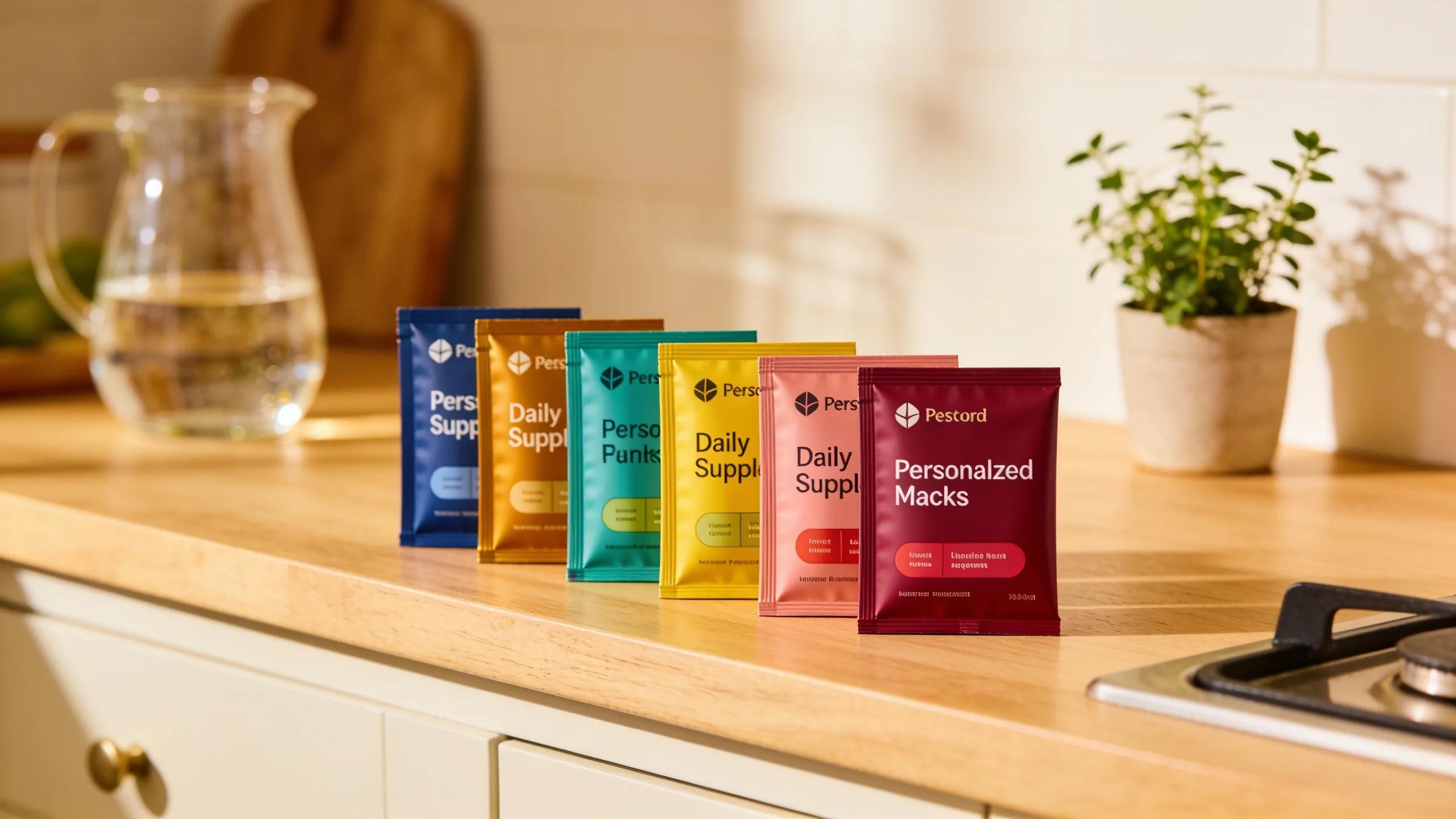
Simplify the Routine. Do Not Simplify the Thinking.
Pack the right plan. Don't use convenient packaging to avoid asking whether the plan itself makes sense.
Where Does Core 3 Fit?
Core 3 is ProofMode's broad AM foundation.
It organizes:
- a multivitamin
- omega-3 support
- probiotic + prebiotic support
into one simplified morning architecture.
Core 3 Foundation
Core 3 is designed for adults who want those three nutritional categories organized together in a simple AM routine.
It is not proof that every person requires a multivitamin, omega-3, and probiotic every day.
Explore Core 3 →And Complete Core 5?
Complete Core 5 is not an “advanced” formula because it sounds more clinical.
It simply expands the architecture.
Core 3 + PM Magnesium + Zinc.
Complete Core 5 Foundation
Complete Core 5 adds a separate PM Magnesium + Zinc component to the Core 3 AM foundation.
Broader does not automatically mean better. The additional minerals should have a reason to be there.
Explore Complete Core 5 →Foundational vs Targeted: Pharmacist Thinking Should Keep These Separate
| Problem | Tool | Why |
|---|---|---|
| Broad nutritional foundation | Core 3 | AM multivitamin + omega-3 + microbiome architecture |
| Broader AM + PM foundation | Complete Core 5 | Core 3 + PM magnesium/zinc |
| Targeted magnesium | Vital Calm | Magnesium when magnesium itself has a defined role |
| Creatine / training | Vital Forge | Creatine monohydrate for a specific performance goal |
| Targeted CoQ10 | Vital Drive | CoQ10 when the nutrient itself is the target |
Targeted magnesium glycinate when magnesium specifically fits the plan.
Explore Vital Calm →5 g creatine monohydrate per serving for a clearly defined performance tool.
Explore Vital Forge →200 mg CoQ10 ubiquinone when CoQ10 itself is the defined target.
Explore Vital Drive →Where Pharmacist Involvement Matters Most: Interactions
Supplements can interact with medications.
That includes interactions involving:
- absorption
- bleeding risk
- sedation
- serotonin
- blood pressure
- glucose
- electrolytes
- drug metabolism
This is exactly where a pharmacist's medication-review mindset adds real value.
Supplements Don't Exist Outside the Medication List.
If a supplement is biologically active enough to matter, it may be biologically active enough to interact.
Does Pharmacist Involvement Guarantee Product Quality?
No.
Finished-product quality depends on:
- raw materials
- supplier qualification
- manufacturing controls
- specifications
- sampling
- testing
- packaging
- storage
- quality-control systems
Pharmacist involvement can improve product scrutiny.
But it does not replace those systems.
How to Evaluate a “Pharmacist-Led” Supplement Brand
Or just repeat the marketing claims?
Especially for botanicals, minerals, stimulants, sedatives, and serotonergic ingredients.
A credible evidence review should tell you where evidence is mixed or weak.
“Supports a pathway” does not automatically mean “improves your health.”
Safety boundaries are part of good education.
Avoid vague claims such as “clinical grade” when specific documentation would be more informative.
What This Does NOT Mean
It does not mean non-pharmacist supplement companies are automatically inferior.
Strong science, manufacturing, quality control, and transparent education can come from many professional backgrounds.
It does not mean a pharmacist credential guarantees efficacy.
The product still needs appropriate evidence.
It does not mean every pharmacist-led product is personally compounded or formulated by a pharmacist.
The actual level of professional involvement should be described accurately.
It does not mean “clinical grade” is proof of anything by itself.
Specific product documentation is more useful than vague premium terminology.
It does not mean daily packs guarantee better health outcomes.
They can improve organization and routine simplicity; the ingredients still determine the nutritional value.
What “Pharmacist-Led” Means at ProofMode
ProofMode does not need to claim that every product was invented from scratch by a pharmacist.
The more meaningful promise is that pharmacist thinking shapes:
- educational content
- product positioning
- dose review
- interaction review
- safety framing
- duplicate-ingredient audits
- evidence interpretation
- foundation vs targeted architecture
Foundation First. Precision When There Is a Reason.
Cover the foundation. Define the problem. Choose the tool. Reassess.
The Best Pharmacist-Led Advice Sometimes Ends With “Don't Take Anything.”
If the diet already covers the need:
good.
If the symptom needs medical evaluation:
evaluate it.
If the supplement duplicates another product:
don't add it.
If the evidence does not support the claim:
don't pretend it does.
Trust Is Not “A Pharmacist Said So.”
Trust is giving you enough information to understand the ingredient, dose, evidence, limitations, and safety considerations for yourself.
Related ProofMode Guides
The full case for radical transparency, evidence levels, and pharmacist-led supplement education.
Read the ProofMode Philosophy →Identity, dose, evidence, safety, and quality — a repeatable way to audit any supplement.
Read the 5-Point Audit →Why broad nutritional coverage comes before increasingly specialized stacks.
Read Foundations First →See how ProofMode applies foundation-vs-targeted thinking to its own daily systems.
Compare the Foundations →Frequently Asked Questions
Are pharmacist-formulated supplements better?
Not automatically. Pharmacist involvement can add valuable expertise in dose, interactions, adverse effects, medication compatibility, and evidence interpretation, but finished-product quality and effectiveness still depend on the actual formula, manufacturing, dose, and evidence.
What does pharmacist-led mean?
Pharmacist-led generally means pharmacist training meaningfully informs product review, education, safety, dosing, interaction assessment, or product architecture. The exact level of involvement should be described accurately rather than assumed.
Is pharmacist-formulated the same as pharmacist-made?
No. A pharmacist may contribute to formulation or review without personally manufacturing the finished supplement.
What does clinical-grade supplement mean?
The phrase does not by itself tell you how the product was manufactured, tested, dosed, or clinically studied. Specific documentation about ingredients, amounts, manufacturing, testing, and evidence is more useful than the phrase “clinical grade.”
Does FDA approve dietary supplements?
Generally, no. FDA does not approve dietary supplements for safety and effectiveness before they are marketed in the same manner as prescription drugs.
Does FDA registration mean a supplement is approved?
No. Facility registration and product approval are different concepts. FDA registration does not mean FDA evaluated and approved a supplement's safety, effectiveness, or health claims.
What do dietary supplement cGMPs do?
FDA dietary supplement current good manufacturing practice requirements establish manufacturing and quality-control obligations intended to help ensure identity, purity, quality, strength, and composition.
Can supplements interact with prescription drugs?
Yes. Supplements can affect drug absorption, metabolism, bleeding risk, sedation, serotonin, blood pressure, glucose, electrolytes, and other clinically important pathways depending on the ingredients involved.
Should I ask a pharmacist about supplements?
FDA specifically recommends discussing supplement use with a doctor, pharmacist, or other healthcare professional, particularly because supplements can interact with medications and other supplements.
Does ProofMode personally formulate every product from scratch?
ProofMode should not imply that every finished product was personally formulated from raw ingredients by a pharmacist unless that is specifically documented. The broader ProofMode model is pharmacist-led: pharmacist training informs product review, education, safety framing, interaction assessment, and supplement architecture.
Is Core 3 designed for everyone?
No. Core 3 is a broad AM nutritional foundation for adults who want multivitamin, omega-3, and probiotic/prebiotic categories organized together. Individual needs still vary.
Is Complete Core 5 automatically better?
No. Complete Core 5 is broader because it adds PM magnesium + zinc to the Core 3 foundation. The additional minerals should independently fit the person's diet, medications, existing supplements, and goals.
Regulatory + Professional Reference Points
FDA — Dietary Supplements.
FDA does not generally approve dietary supplements for safety and effectiveness before marketing. Manufacturers and distributors are responsible for complying with applicable safety, labeling, and manufacturing requirements.
FDA Dietary Supplement Q&A →
FDA — Supplement + Medication Safety.
FDA advises consumers to speak with a doctor, pharmacist, or other healthcare professional before using dietary supplements because supplements can interact with medicines and other products.
FDA Supplement Guidance →
U.S. Bureau of Labor Statistics — Pharmacist Role.
Pharmacists are trained healthcare professionals who review medication accuracy and advise patients and clinicians about dosage, interactions, adverse effects, and appropriate medication use.
Pharmacist Occupational Overview →
FTC — Health Products Compliance Guidance.
Health-related advertising claims must be truthful, non-misleading, and supported by competent and reliable scientific evidence relevant to the actual product and claim.
FTC Health Products Guidance →
The Pharmacist Should Make the Questions Harder — Not the Marketing Louder.
Use the credential to interrogate the formula, the dose, the evidence, the interaction profile, and the need for the product. Then let the supplement earn its place.
The Takeaway
Pharmacist-led does not automatically mean superior.
Pharmacist expertise can add meaningful value in dose, interactions, safety, and evidence interpretation.
The finished formula still needs to stand on its own.
“Clinical grade” is less useful than specific quality documentation.
FDA registration does not mean FDA approval.
cGMP manufacturing does not prove clinical effectiveness.
Daily packs can simplify routines without changing the pharmacology of the ingredients.
Core 3 provides one broad AM foundation.
Complete Core 5 adds PM magnesium + zinc.
Targeted products belong after the problem is defined.
A strong pharmacist-led brand should be willing to tell you when a supplement does not have a reason to be there.
The pharmacist should make the questions harder — not the marketing louder.
This article is for educational purposes only and is not medical advice. Pharmacist involvement does not by itself establish the safety, quality, or effectiveness of a dietary supplement. Supplement decisions depend on the specific ingredient, dose, formulation, manufacturing quality, medications, medical conditions, pregnancy status, kidney and liver function, diet, allergies, and individual goals. Discuss complex supplement regimens or potential drug-supplement interactions with an appropriate healthcare professional.


