


The Ingredient List Can Look Impressive While Hiding the Most Important Number.
Proprietary blends are legal. They can identify every ingredient in the blend. But they may still leave out the individual dose of each ingredient — which can make it impossible for a consumer to determine whether the formula resembles the doses used in human research.
Are Proprietary Blends Bad?
Not automatically.
Under FDA labeling rules, a proprietary blend can list the total weight of the blend and then identify the dietary ingredients within it in descending order by weight without disclosing the amount of each individual ingredient.
The problem is not that the formula is automatically unsafe or ineffective. The problem is that you may not have enough information to evaluate the dose, compare it with clinical research, or intelligently audit the claim.
Key Takeaways
The total blend weight is disclosed, while individual amounts within the blend may remain undisclosed.
Ingredients within the blend must be listed in descending order of predominance by weight.
You may know the ingredient is there while still not knowing whether the amount resembles the research.
Transparency allows auditing; it does not guarantee that the formula is appropriately dosed.
Form, dose, population, duration, and endpoint all matter.
Transparency should make verification easier, not harder.
What Is a Proprietary Blend?
A proprietary blend groups multiple dietary ingredients together under one blend name.
That name might be something straightforward:
“Amino Acid Blend”
Or something much more dramatic:
“Hyper-Anabolic NeuroMetabolic Matrix.”
FDA requires the label to identify the blend and list its total weight.
The dietary ingredients within the proprietary blend are then listed underneath in descending order of predominance by weight.
What may remain undisclosed:
the individual amount of each ingredient.
Proprietary Does Not Mean Unlisted.
The dietary ingredients still have to appear on the label. The opacity is usually in the individual amounts, not necessarily the ingredient identities.
Why the Total Blend Weight Matters
Sometimes the label gives you enough information to detect a problem without knowing every individual dose.
Imagine a product advertises a five-ingredient:
“Performance Matrix — 2,000 mg”
And the ingredients are:
- Creatine monohydrate
- Beta-alanine
- Citrulline
- Taurine
- Betaine
The entire blend weighs:
2 grams.
But commonly studied amounts of creatine alone are often:
approximately 3–5 grams per day.
You already know the blend cannot provide 5 grams of creatine.
Because:
the entire blend does not weigh 5 grams.
Sometimes the Blend Exposes Itself.
If the total weight of five ingredients is smaller than the studied dose of just one of them, the formula cannot match that evidence-based dose.
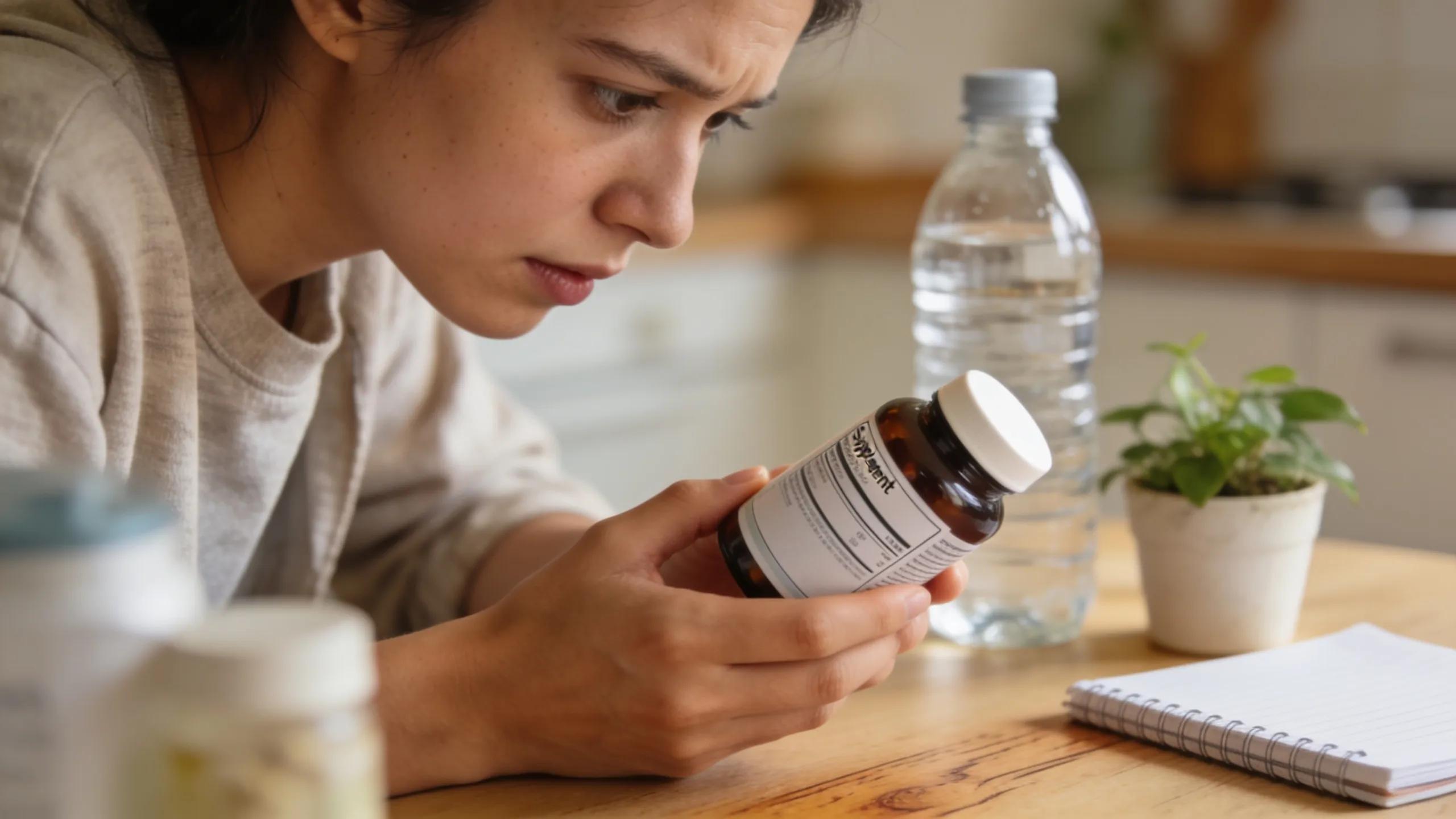
Why Do Companies Use Proprietary Blends?
There can be several reasons.
- protecting a formula from easy copying
- simplifying the Supplement Facts presentation
- marketing a combination as a branded system
- avoiding disclosure of individual ingredient amounts
That last reason is where consumers should become more skeptical.
But it is not fair to assume that every company using a proprietary blend is deliberately hiding an ineffective formula.
Ingredient Order Gives You a Clue
FDA requires ingredients within the proprietary blend to appear:
in descending order of predominance by weight.
That means the first ingredient weighs at least as much as each ingredient listed after it.
But that still does not tell you:
- the actual amount
- whether the dose resembles research
- whether the dosage form changes bioavailability
- whether the finished combination was studied
Does “Proprietary Blend” Mean Hidden Ingredients?
Not in the way people often think.
Dietary ingredients contained in the blend still need to appear in the Supplement Facts labeling.
The proprietary aspect is generally:
the undisclosed individual amounts.
That distinction matters because saying a blend contains “mystery ingredients” would misrepresent how the labeling rule works.
So What Is the Safety Problem?
Dose uncertainty can make safety assessment harder.
Imagine a blend contains:
- a stimulant
- a sedating botanical
- a serotonergic ingredient
- a blood-pressure-active compound
- an ingredient that affects glucose
Knowing the identity helps.
Knowing the amount helps more.
Without the individual dose, it may be harder to judge:
- interaction relevance
- dose-related adverse effects
- total daily exposure across several products
Is “Natural Flavor” the Same Thing as a Proprietary Blend?
No.
“Natural flavor” is a different labeling category.
It should not be lumped into the same criticism as a proprietary dietary-ingredient blend.
If you are auditing whether a formula provides an evidence-based dose of creatine, magnesium, curcumin, ashwagandha, or another active ingredient:
focus on the Supplement Facts panel.
Why Individual Dose Disclosure Is So Useful
Full dose disclosure allows you to ask:
- Does this match the human research?
- Is the dose too low to reasonably extrapolate the study?
- Am I duplicating this ingredient elsewhere?
- Is this dose relevant to a medication interaction?
- Am I approaching an upper intake level?
If I Can't See the Dose, I Can't Audit the Claim.
Disclosure does not guarantee effectiveness. It gives you the information needed to determine whether the formula even has a chance of resembling the evidence.
But Transparent Does Not Automatically Mean Effective.
This point matters just as much.
A label can proudly disclose:
Creatine Monohydrate — 250 mg
Very transparent.
But if the clinical conversation is based on:
3–5 grams per day
transparency has exposed a weak dose.
Transparency Is Step One.
Transparency: Can I see the amount?
Evidence: Does the amount resemble relevant human research?
Clinical relevance: Does that evidence actually support the claim being made?
Why Dose Transparency Matters for Marketing Claims
FTC requires objective health claims to be truthful, non-misleading, and adequately substantiated.
For health-related claims, the supporting research needs to be relevant to:
- the actual product
- the actual ingredient
- the formulation
- the dose
- the population
- the outcome being advertised
FTC even specifically warns against relying on studies using:
a different formulation or concentration
to support a marketed product when the differences matter.
Evidence Is Only Useful if It Matches the Product Closely Enough.
A study on a different dose, different formulation, or different population cannot automatically be used as proof that the product in your cart will produce the same result.
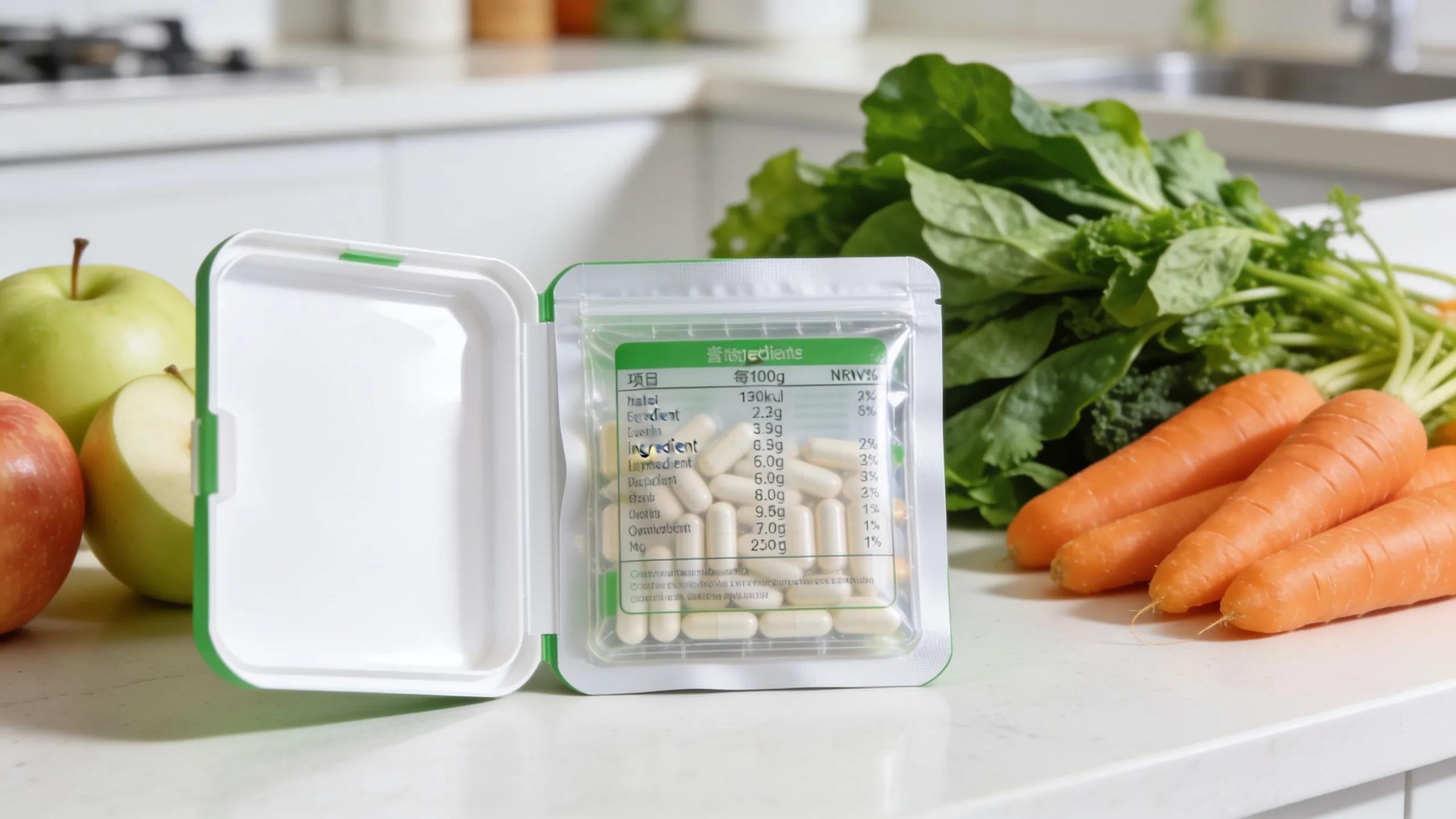
How to Audit a Proprietary Blend in 60 Seconds
That gives you the maximum amount shared across all ingredients in the blend.
Ten active ingredients sharing 800 mg should immediately trigger dose questions.
Ingredients are listed in descending order by weight.
Find the ingredient with the clearest evidence-based dosing range.
If the entire blend is smaller than the studied amount of one anchor ingredient, the formula cannot match that dose.
“Contains Ingredient X” is weaker than “provides the dose of Ingredient X used in Trial Y.”
Proprietary Blend vs Fully Disclosed Formula
| Question | Proprietary Blend | Fully Disclosed Formula |
|---|---|---|
| Ingredient identity visible? | Generally yes | Yes |
| Total blend weight visible? | Yes | Not applicable |
| Individual active doses visible? | Often no | Yes |
| Easy to compare with research? | Often difficult | Much easier |
| Guaranteed effective? | No | No |
What ProofMode Tries to Do Differently
The ProofMode approach is not:
“Trust us because we're the transparent brand.”
The better standard is:
give you enough information to question us too.
That means product education should try to make clear:
- what the product contains
- what the disclosed dose is
- what each ingredient is intended to do
- what evidence actually supports
- what evidence does not establish
- important safety or interaction issues
Foundation First Still Applies
Transparency is not an excuse to build an enormous stack.
ProofMode's hierarchy remains:
Foundation → Defined Problem → Targeted Tool
Multivitamin + omega-3 + probiotic/prebiotic support organized into one AM foundation.
Explore Core 3 →Core 3 plus a separate PM Magnesium + Zinc component when those minerals independently fit the plan.
Explore Complete Core 5 →Targeted Products Should Be Even Easier to Audit
5 g creatine monohydrate per serving. Easy to compare with the creatine evidence base.
Explore Vital Forge →275 mg magnesium per 3-capsule serving. The dose is visible, so the consumer can audit total magnesium intake.
Explore Vital Calm →What Full Disclosure Does NOT Prove
It does not prove the dose is effective.
You still have to compare the amount with relevant research.
It does not prove the finished product was clinically tested.
Ingredient evidence and finished-product evidence are different.
It does not prove the product is safe for everyone.
Medications, medical conditions, pregnancy, and other supplements still matter.
It does not prove the marketing claim is accurate.
The endpoint and magnitude of effect still need to match the evidence.
It does not make more ingredients better.
Complexity should still have to earn its place.
Seven Proprietary Blend Red Flags
- The blend contains many ingredients but has a tiny total weight.
- The marketing repeatedly cites specific studied doses that the label does not disclose.
- The product claims several unrelated outcomes from one blend.
- The company uses “clinically dosed” while hiding individual doses.
- There is no way to calculate total exposure to stimulants, minerals, or interacting botanicals.
- The company talks about protecting its “secret formula” more than explaining the evidence.
- The front label is dramatically more specific than the Supplement Facts panel.
The ProofMode Blend Audit
Proprietary does not excuse unlabeled dietary ingredients.
If not, evidence matching becomes much harder.
Compare the whole blend with known studied doses.
Same ingredient name is not enough.
Hidden doses make that harder for biologically active ingredients.
If not, the marketing may be doing more work than the formula.
Related ProofMode Guides
Identity, dose, evidence, safety, and quality — the full framework for auditing any supplement.
Read the 5-Point Audit →Why evidence-first transparency includes showing limitations instead of hiding them.
Read the ProofMode Philosophy →Build the nutritional base before collecting increasingly complicated blends.
Read Foundations First →Why form, dose, absorption, and context matter more than premium-sounding ingredient language.
Read the Bioavailability Guide →Frequently Asked Questions
What is a proprietary blend in a supplement?
A proprietary blend is a combination of dietary ingredients grouped under a blend name. FDA labeling rules require the total weight of the blend and the identities of the dietary ingredients within it, but the individual amount of each ingredient does not necessarily have to be disclosed.
Are proprietary blends legal?
Yes. FDA regulations specifically provide labeling rules for proprietary blends.
Do proprietary blends hide ingredients?
The dietary ingredients within the blend still need to be listed. What is often hidden is the individual quantity of each ingredient.
Are ingredients in a proprietary blend listed in order?
Yes. FDA requires the dietary ingredients in the blend to be listed in descending order of predominance by weight.
Does a proprietary blend mean the product is underdosed?
Not necessarily. The problem is that individual dose verification may be impossible from the label alone. In some cases, however, the total blend weight can mathematically show that one or more marketed doses cannot be present.
Is a fully disclosed supplement always better?
It is easier to audit, but full disclosure does not guarantee an effective formula. A transparent product can still provide an ineffective dose or make an unsupported claim.
How can I tell if a proprietary blend is clinically dosed?
Often you cannot determine that with certainty if individual doses are not disclosed. Compare the total blend weight and ingredient order with dosing used in relevant human studies. Be skeptical of specific “clinically dosed” claims that cannot be verified from the label.
Is natural flavor a proprietary blend?
No. Natural flavor is a separate labeling category and should not be confused with a proprietary blend of active dietary ingredients.
Why does dose matter so much?
Biological effects are dose dependent. If the evidence supporting a claim used a specific amount of an ingredient, a dramatically smaller amount cannot automatically be assumed to produce the same outcome.
Does FTC require supplement health claims to be supported?
Yes. FTC requires advertising to be truthful and not misleading and requires adequate substantiation for objective health claims. Evidence should be relevant to the actual product, formulation, dose, population, and outcome being advertised.
Does ProofMode use proprietary blends?
Product formulas should be evaluated individually. ProofMode should only claim that a product is fully dose-transparent when the individual active ingredient amounts are actually disclosed on that specific product label.
Regulatory + Evidence Reference Points
FDA — Proprietary Blend Labeling.
FDA requires a proprietary blend to be identified by name and the total weight of all dietary ingredients in the blend to be declared. The individual dietary ingredients within the blend are listed in descending order of predominance by weight.
FDA Supplement Labeling Guide →
FTC — Health Products Compliance Guidance.
Health-related advertising must be truthful, not misleading, and supported by competent and reliable scientific evidence. FTC specifically emphasizes that evidence must be relevant to the actual formulation, dose, population, and claim being marketed.
FTC Health Products Guidance →
If I Can't See the Dose, I Can't Audit the Claim.
Proprietary blends are legal. They are not automatically ineffective. But hiding individual doses removes one of the most important tools consumers have for comparing a formula with the evidence.
The Takeaway
Proprietary blends are legal.
The ingredients inside them are still listed.
The individual ingredient amounts may not be.
Ingredients are listed in descending order by weight.
The total blend weight can sometimes expose impossible dosing claims.
Full disclosure makes evidence comparison easier.
Full disclosure does not guarantee an effective formulation.
Ingredient evidence does not automatically prove a finished blend.
Marketing claims still need evidence that matches the actual dose, formulation, population, and outcome.
If I can't see the dose, I can't audit the claim.
This article is for educational purposes only and is not medical advice. Proprietary blends are permitted under U.S. dietary supplement labeling regulations when applicable labeling requirements are followed. The presence or absence of a proprietary blend does not by itself establish a product's safety, effectiveness, purity, or quality. Evaluate individual ingredients, disclosed doses, total blend weight, medication interactions, existing supplements, medical conditions, and the relevance of the scientific evidence before making supplement decisions.


